









Co-founderBehind your login

The one the model thinks you'd start something with.
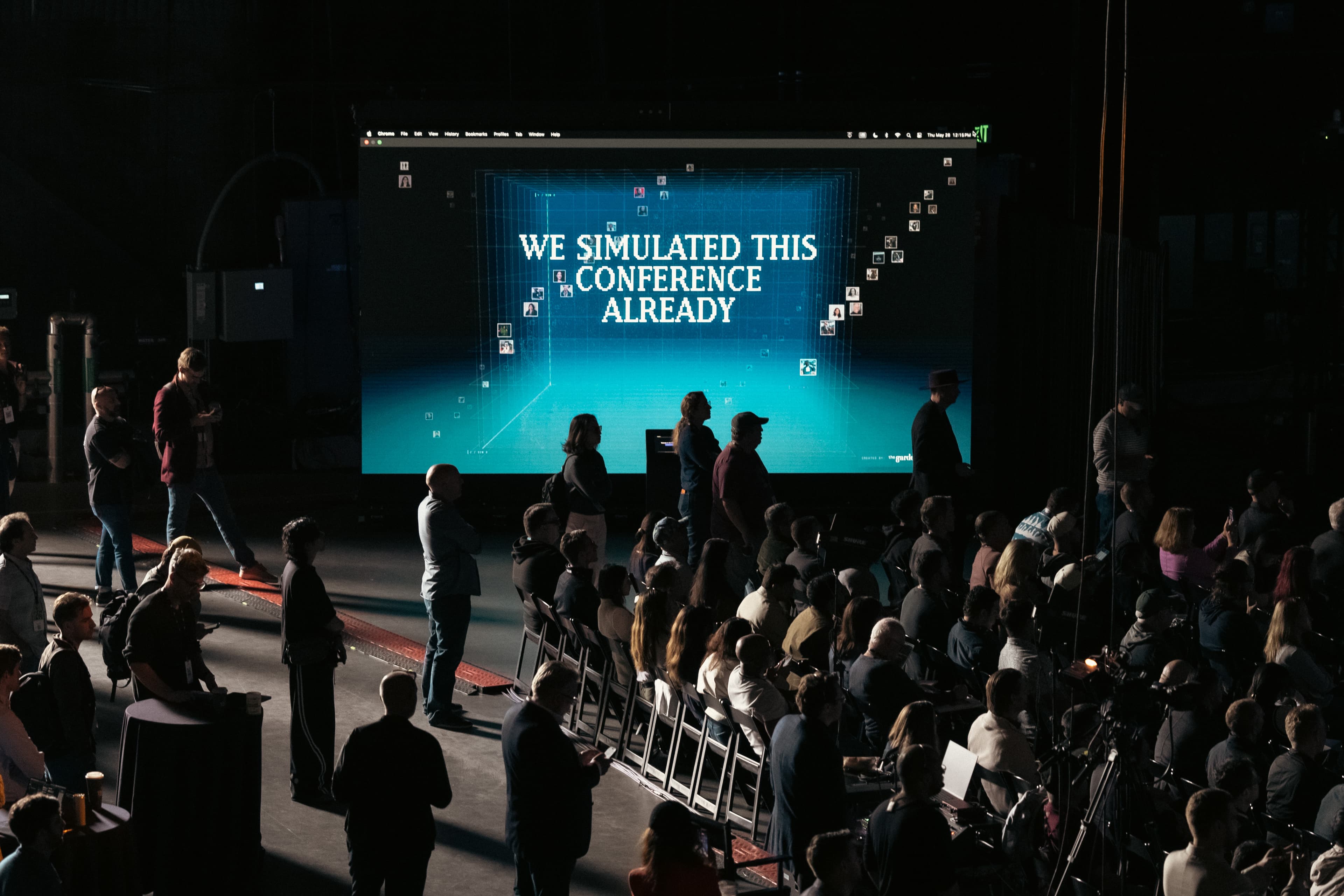
We ran AI on the Lot in two versions: one on the physical Amazon lot, and one as a virtual simulation. This is what we found.
1,631 simulated before the doors opened
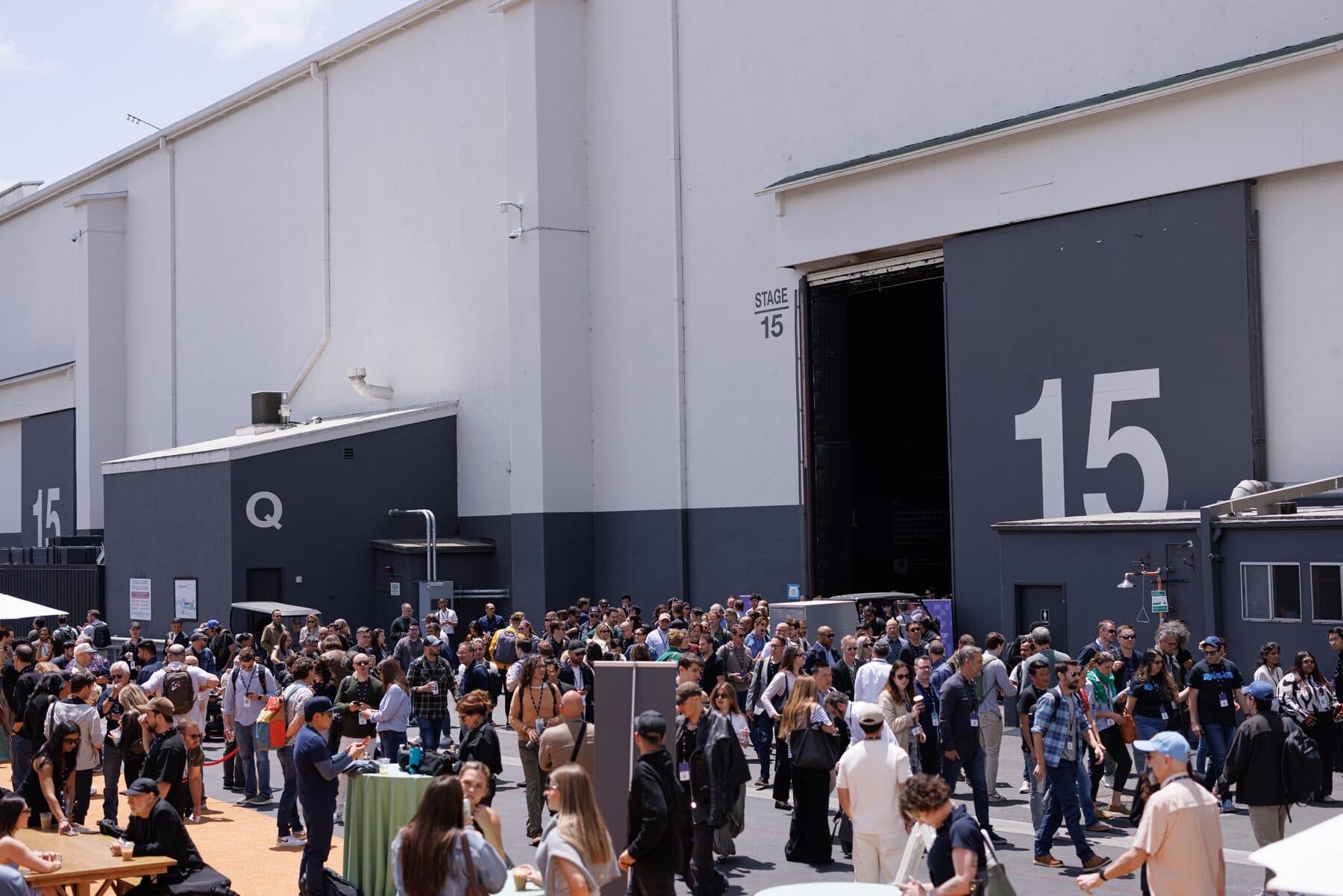
The reality
Filmmakers, media execs, founders, and engineers carried the room, with a long tail of partnerships, press, and investors filling out the edges.
By role
By company type
The reality
Most picked several, but it's overwhelmingly about meeting people and learning.
The reality
This year the crowd grew more advanced.
The reality
Los Angeles was the center of gravity, with the Bay Area and New York also making a showing.
On the lot
A few of the standouts who took the stage — directors, founders, and the people building what comes next.
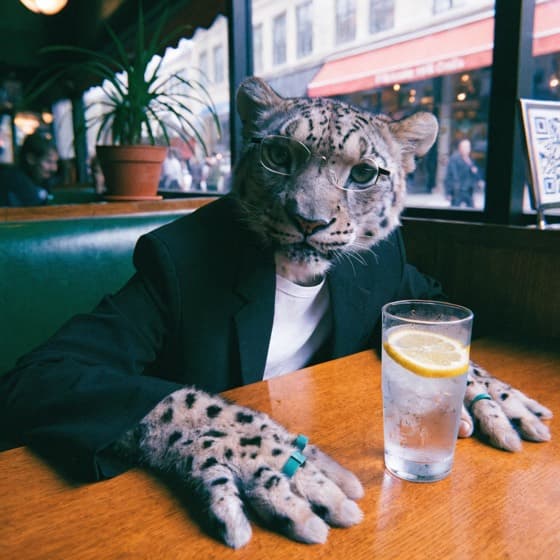
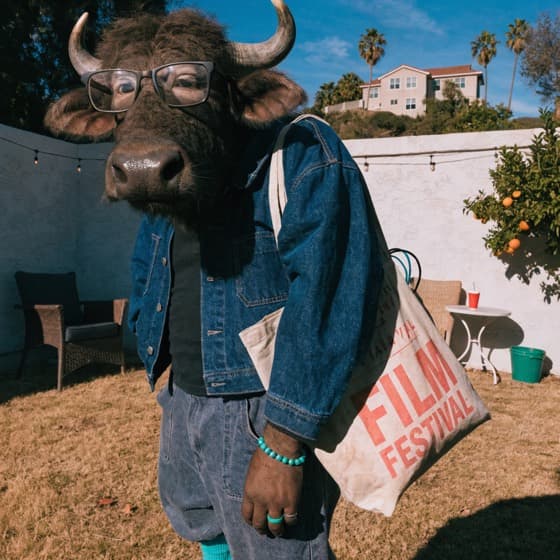
We turned each registration into an agentic sim: cast it as an archetype, gave it an avatar, and ran it through the matchmaker to predict who'd click.
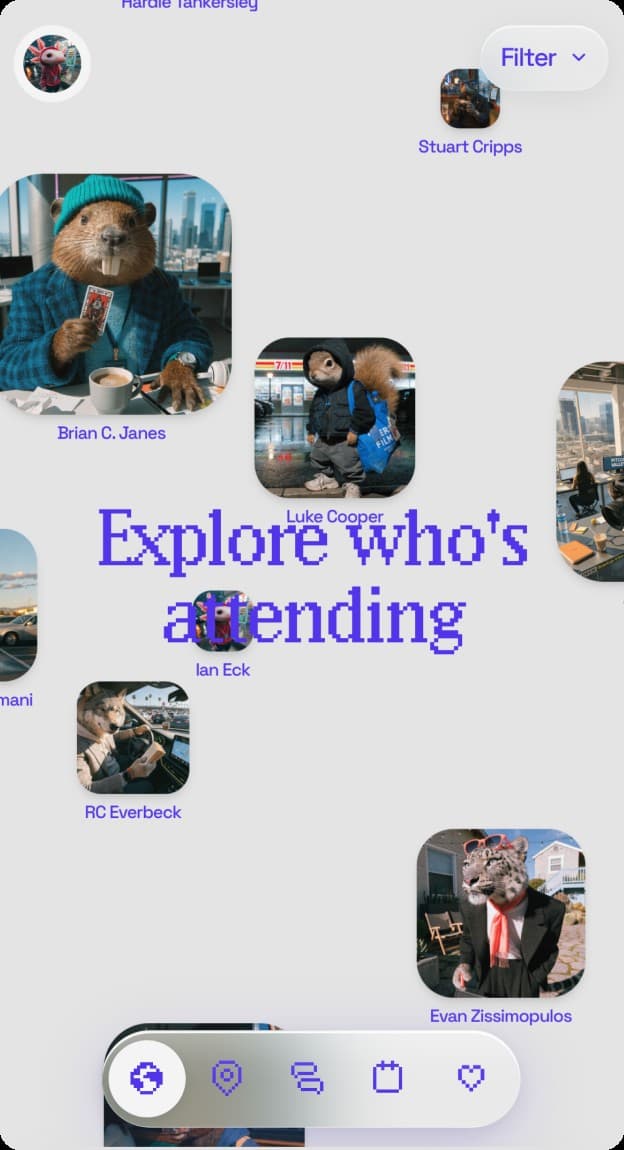
The simulation
A private social network, aided by simulation data, that would show you attendees, foster discovery, and play matchmaker.
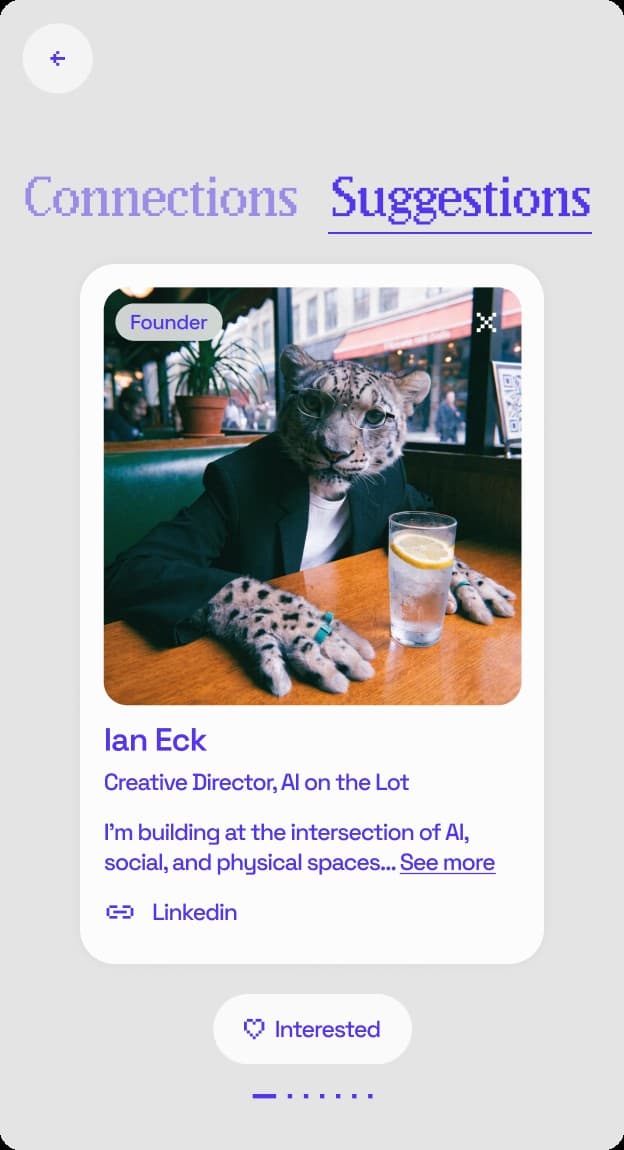
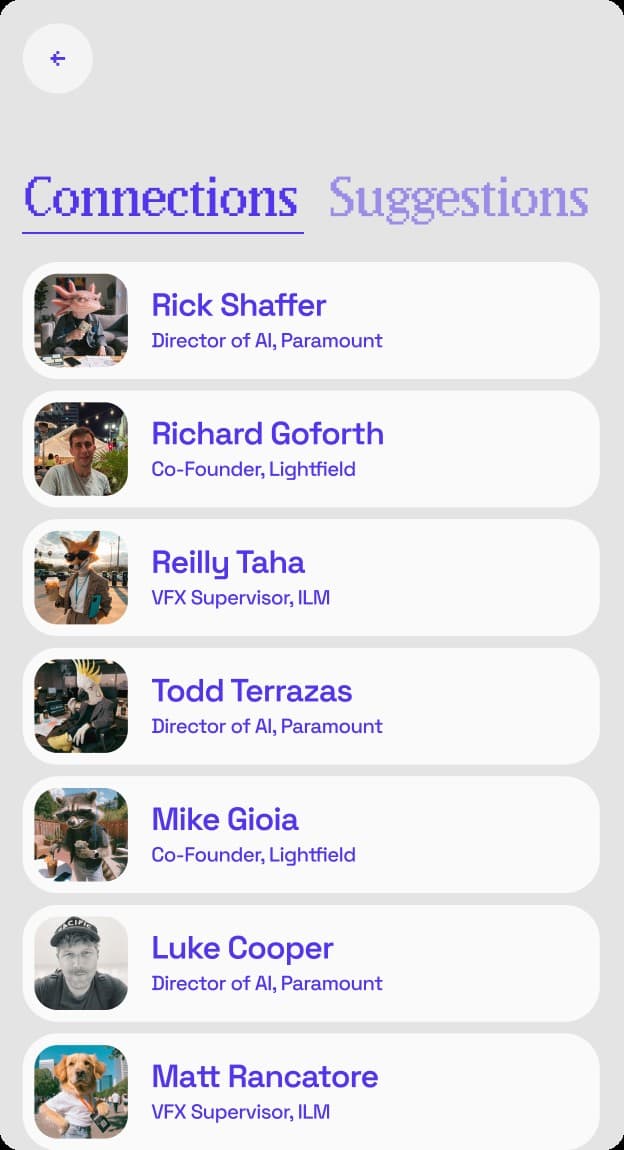
The simulation
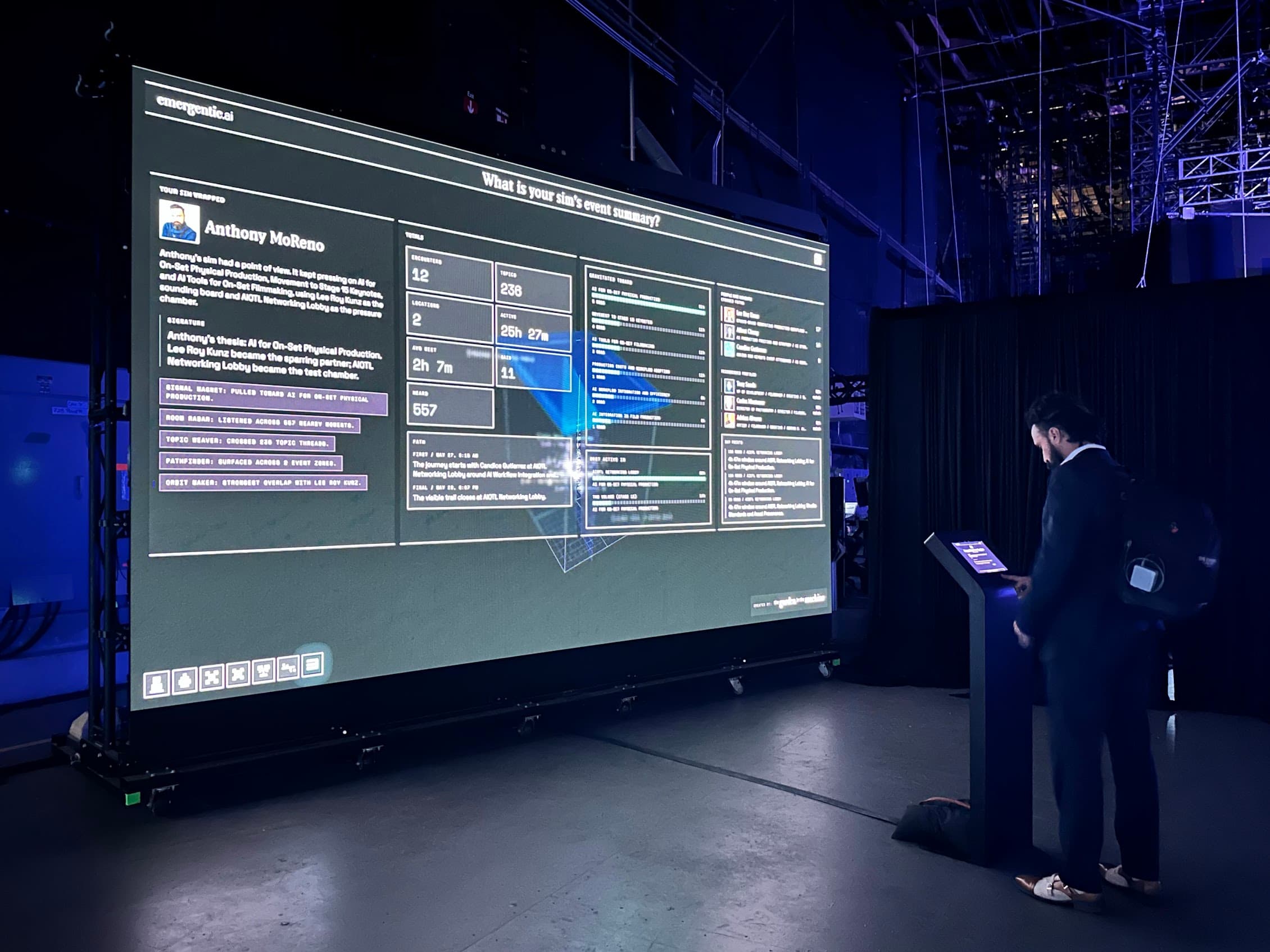
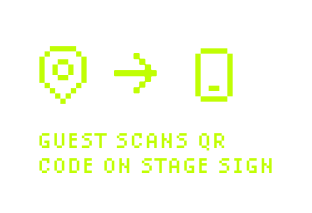
By scanning badges or venue signs, attendees could learn about what happened in the Simulation.
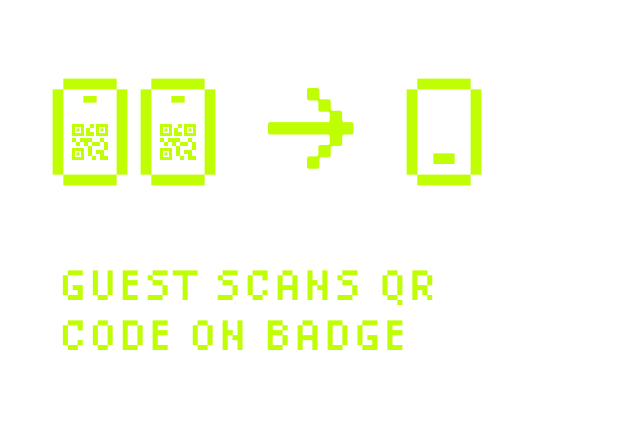
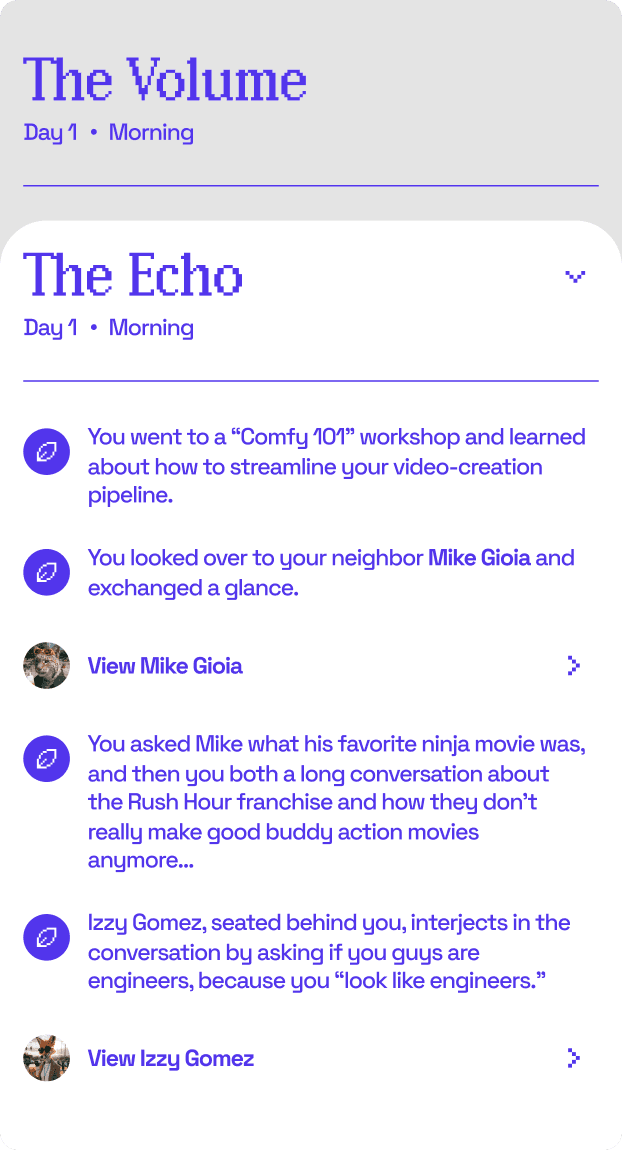
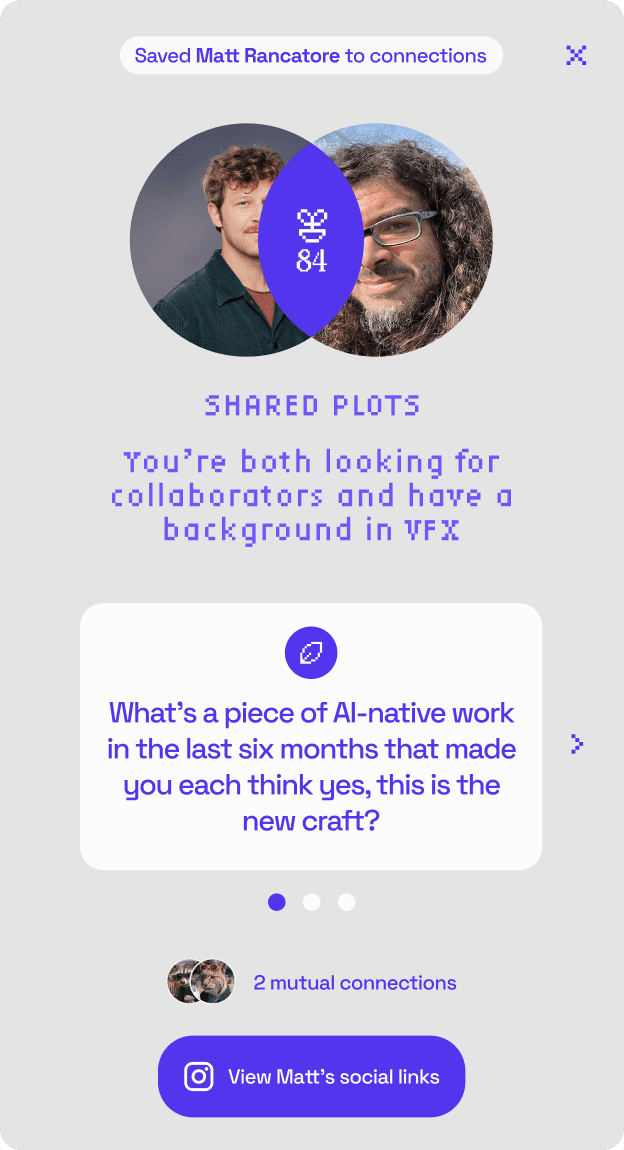
The badges drew prompts from a hopper of questions based on which archetypes were talking to each other.
The simulation
We built a pipeline of prompts that translated each guest into a persona. Most of you adjusted your picks.
One note re: gender, since the model was informed by everyone’s archetypes, and the archetypes skewed heavily Director/Founder, this led to more masculine clothing styles...a sign of bias within the model, and also our selves.
Archetypes
Critters
Props
Settings
Moods
Gender
Randomly assigned per generation.
The simulation
We worked with The Garden in the Machine to build a virtual conference in emergentic.ai, populated by attendees' digital twins. Over a two-day simulation, they moved, talked, planned their days, and attended talks as the schedule played out.
Per attendee, across the two-day simulation
The simulation
The truth is we built this system in 6 weeks. The simulation worked, but the app's Day 1 launch was plagued by bad wifi, onboarding confusion, and general instability.
Two ways to connect
People you should meet
A co-founder. A mentor. An investor. A doppelganger. A rival. A new bestie. The model drew each one from the room — who they are is waiting behind your login.
Version 1: Post Mortem
Six weeks from conception to execution is not enough time to build a perfectly polished app. The simulation worked; the app’s first day did not. We’re naming the parts that broke and the parts that didn’t, because we want to improve upon them, with help from our community.